Are we getting Overwatch back together?
Welcome to Video Game Perennials, a series in which I will ” Check in” on past and present live service games to see what’s new or different about each title.
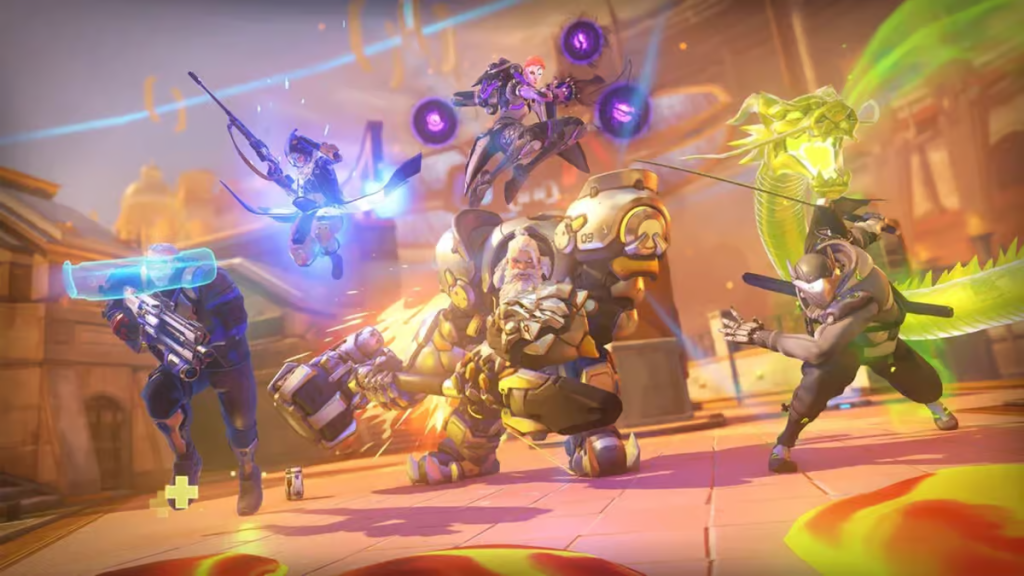
In the carousel of online PVP and competitive shooters, Overwatch has been one of my most played games since its launch in 2016. From its meteoritic rise as a premiere hero shooter to its heavy investment into its now sadly defunct E-sports league to now being two years into its sequel, Overwatch 2, Overwatch has always been a game that’s hard for me to quit for too long, and with its new mode Stadium, it certainly has me hooked once again.
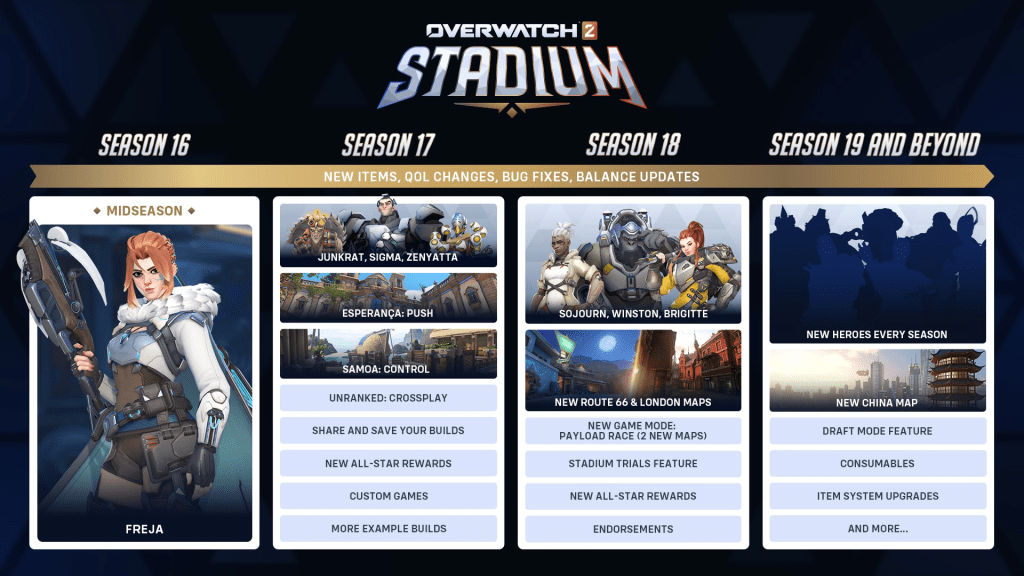
Overwatch 2 was fully released in August of 2023 and as we approach year three of the Blizzard hero shooter, now may be the most interesting time to play. With the start of Season 16, new mode Stadium is changing the outlook of what Overwatch can be going forward.
Since its release, Overwatch has undoubtedly been my most played game as I balance an on-again-off-again relationship with the hero shooter. One of the things that keeps me coming back is the push and pull of how each hero is balanced against one another and the meta-game that creates and dictates inside each game. At times the constant counter-swapping of heroes can be a bit much but, at large, the mind games that come with each character selection and who they play well against always excites me.
With Overwatch’s new MOBA-like mode Stadium, the game is flipped on its head from a contest where the more heroes you are good with, the more of an advantage you have against your opponents. To now: a knowledge and adaptability game that wants you to focus on honing your craft with specific heroes to gain the upper hand on your opponents.
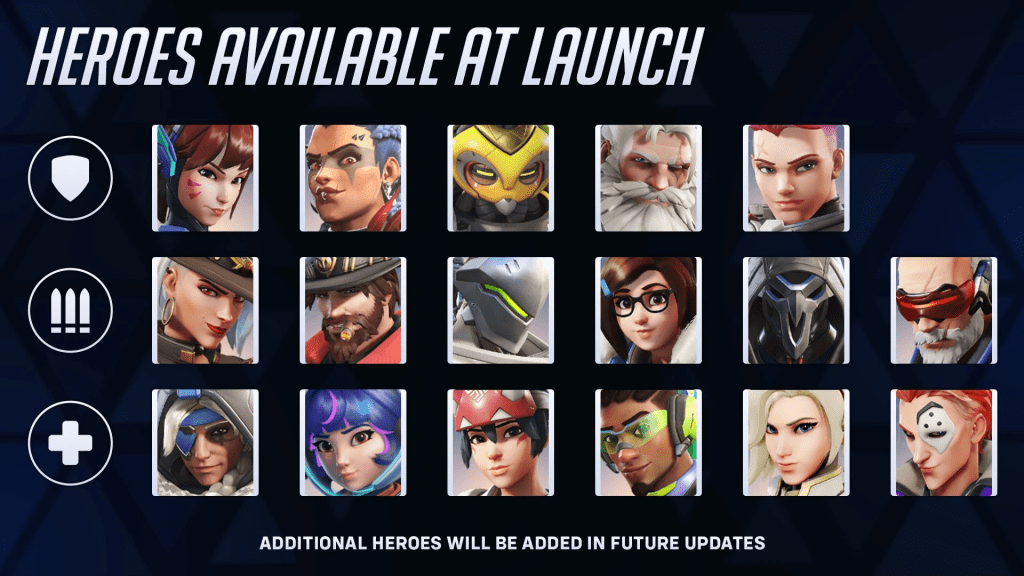
In Stadium, players compete in short rounds of Push, Capture, and Control in a best-of-7 format. At the start of each game, teams consisting of the usual one Tank, two Damage, and two Supports will choose their characters for the entire match without knowing who their counterparts are picking. Currently, the roster is limited to a portion of the entire Overwatch roster with plans to add more heroes with each season.
Each round in Stadium can be over in minutes or be a back-and-forth tussle on a control point depending on how each player builds their characters and coordinates attacks on one another. The foundation of Overwatch is still there, Stadium just builds on it.
From there, players get a small allowance and the chance to pick their first of four free character-specific permanent Powers. The ability to pick a Power lands every other round but the ability to shop and spend your hard-earned money from the round before on helpful items happens at the start of each round with three different tabs to shop in. Weapon, Ability, and Survival.
A fun twist to the shop is that every character’s available items are unique. Available in the shop are three tiers of modifiers, green, blue, and purple with each tier of modifier costing more than the last. Most mods will simply give characters more ammo, attack power, or health, but a few go beyond that.
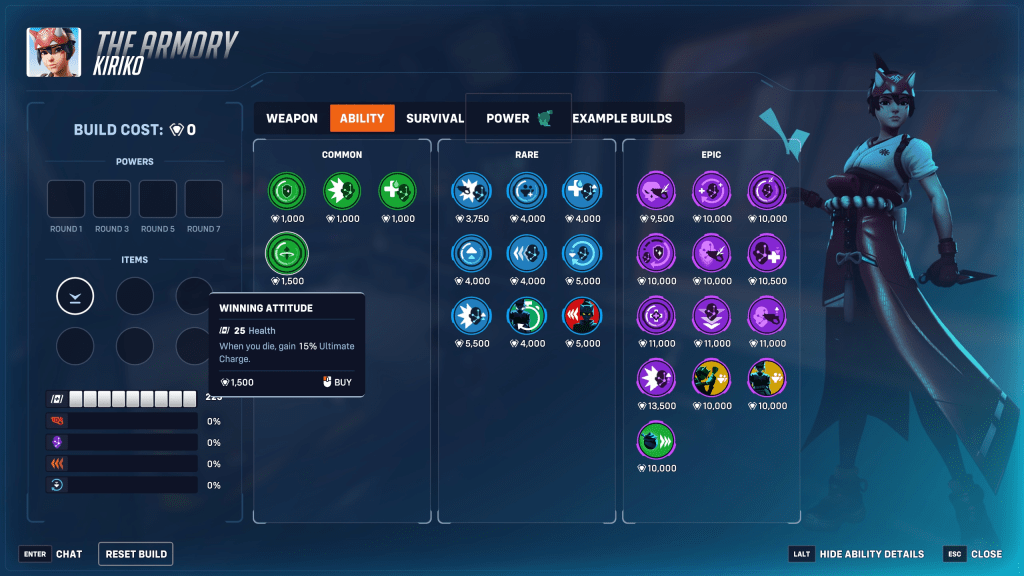
For example, in the third tier of Items for Reinhardt, “Gryphon Glider”, is available to purchase for $10,000 and straight up allows Rein to fly around the map. Most people would probably build into making Reinhardt’s fire strike as strong and fast as it can be with Ability Power-ups, but there is enough flexibility in Stadium to make Rein a flying tank with unlimited health or a pure brawler that lights enemies on fire the more he swings.
One build I’ve loved playing with is a build that turns Juno into a rapid rocket-blasting healer that can replenish teammates’ health in a moment or delete enemies just as fast. By building into hero ability power and equipping the Pulsar Plus power, Juno can fire her Rockets every few seconds locking onto everyone but herself for wild amounts of burst healing and damage.
The builds players will be able to create are, of course, going to be limited just based on the amount of powers and items offered, but so far it feels like every character can be played in a new way creating that super satisfying feeling that only some games can offer. When games allow their players to feel “broken” or that they found something that “breaks” the game. Most of the time, of course, players find builds and things that the developers intended for them to find or tinker with. But as the consumer, the little boost of dopamine we get from finding something that alters an established concept in a “broken” way is addicting. Blizzard has already confirmed that loadouts will be able to be saved in a coming patch. So when you find the perfect Zarya walker tank build, it’ll be there for next time.
At this point, the first season of Stadium is not on the level of intensity of a MOBA like League of Legends or even Valve’s Deadlock but by no means is Stadium “Babies First MOBA”. It leaves enough space for a lot of new and unique ideas while being very user-friendly and accommodating to those already familiar with the Overwatch formula. And while that’s a great thing so far, there are some ideas that can be lifted from its competition. Including one of Blizzard’s other titles.
Something I would love to see Overwatch tinker with is a base system similar to Heroes of the Storm, League of Legends, or just about any MOBA. I currently dig the small iterations on the modes we are used to with Overwatch but, a new base attack mode would be a mode I would love to experience within the OW sandbox. If you played any of the few campaign experiences in Overwatch 2, Torbjörns workshop is, in my opinion, a great jumping-off point for a potential base/tower defense map.
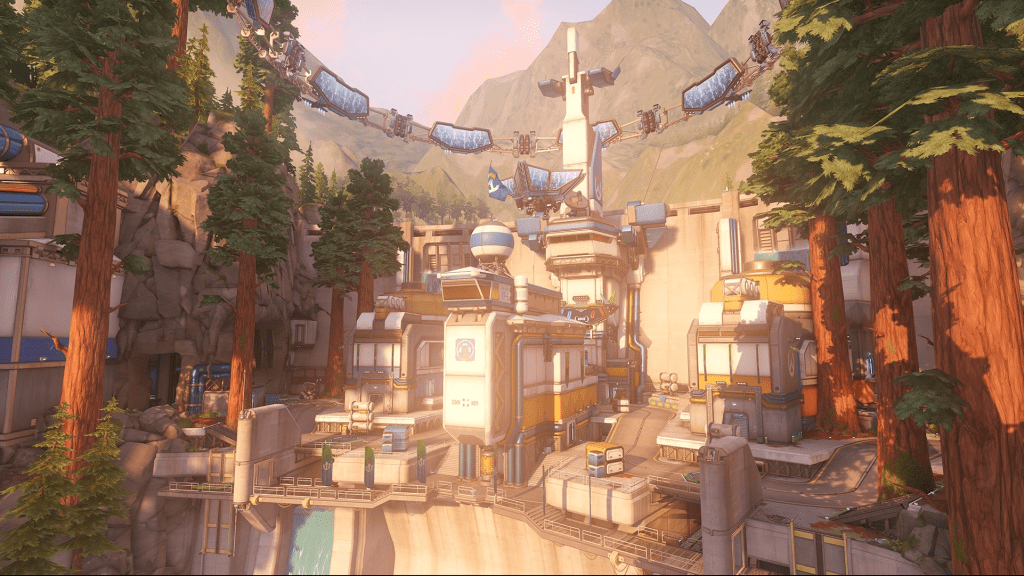
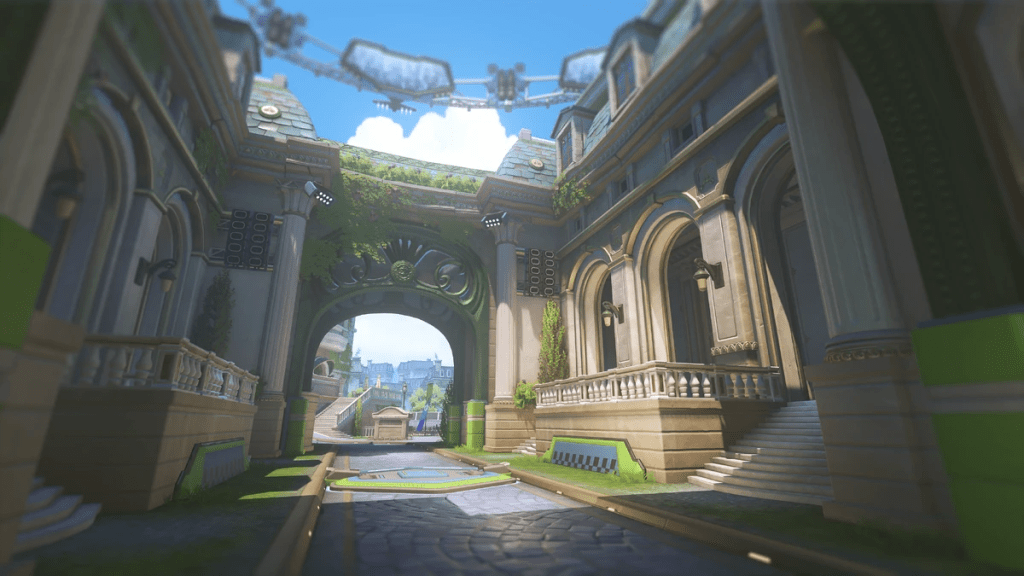
In Stadium, each map is smaller than normal offering tighter, more controlled chaos. The rounds are fast and with how quick the rounds can be, a majority of the action takes place in the sunlight with little time to be hiding or going for long backline flanks.
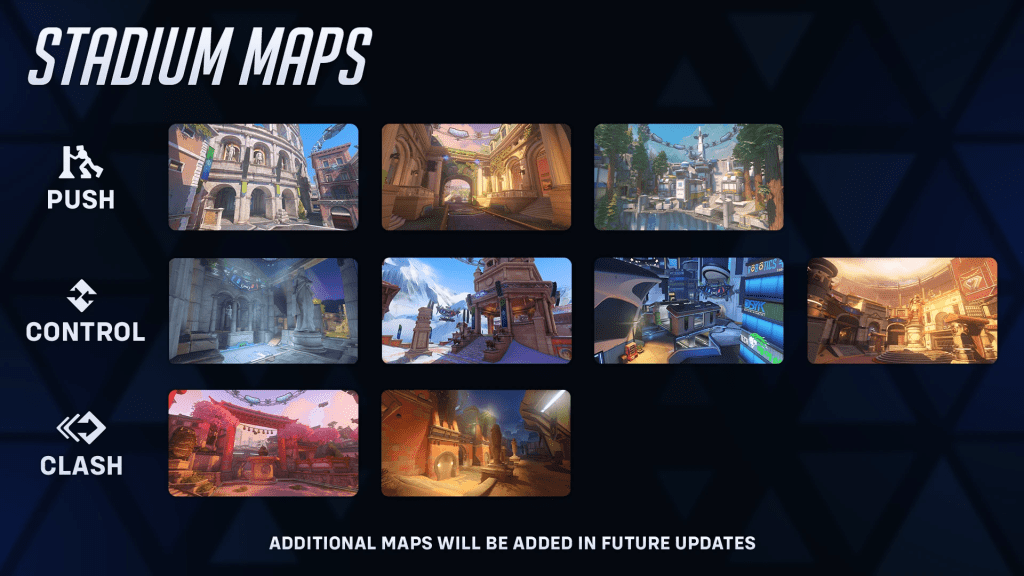
At the moment, the main thing I don’t love in Stadium is the map pool and the lack of Torbjörn or Baptiste. The latter of those two things I can get over for now. Currently, nine maps are played at random, and in the ~15 hours I’ve played of Stadium, the Control maps certainly feel the most engaging.
My only gripe with the Control maps is that each of the four is at the same point rather than rotating through the three possible destinations. But when it comes to adapting game modes from the base game to Stadium, Clash still is not enjoyable.
The Battlefield Rush-inspired mode still does not gel with Overwatch the way Control or even Push has since its addition to the series. When one team gets rolling in Clash, it can be hard for the other to even have a chance to make a halfway decent contest. The longer the gap between the first and last player on a team to die, the harder it becomes for a team to have a chance at regrouping while not sacrificing too much of the objective time. This can go for most modes in Overwatch, but for Clash, walking out of spawn into a group of five enemies with five ultimates ready to be unleashed will make the days of 2CP maps feel like a breeze.
Apart from the map pool, I think Stadium is currently a strong offering and worth dipping back into Overwatch for. It’s not reinventing the MOBA genre of course, but it is taking that strong identity and core that Overwatch has and making an iteration that feels almost overdue with how fun it is. Whether it comes down to climbing the new ranked system or creating a Cassidy build that has 15 bullets to fan the hammer with, Stadium is a fun time and offers a gateway for Blizzard to keep its cash cow mooing.
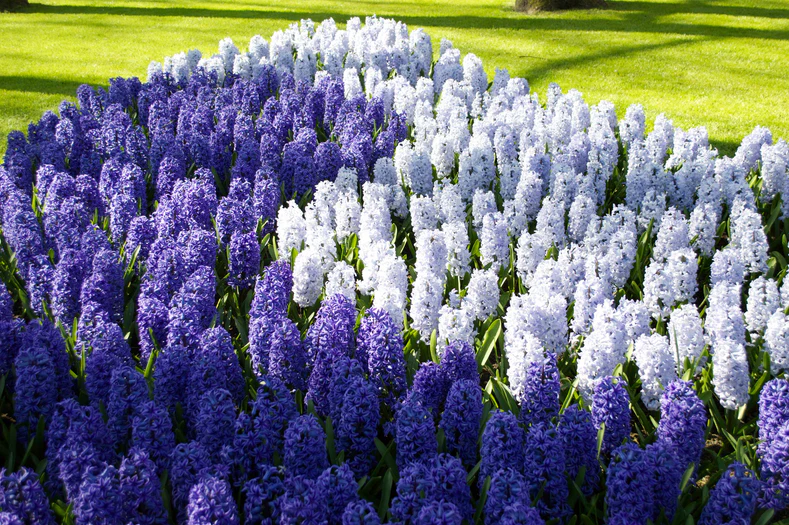
Overwatch 2 is the Hyacinth of Perennials right now. It stands tall, everyone knows what it is, and it comes it a wide range of different colors depending on what you are looking for.


 Green Thumbs Magazine
Leave a comment