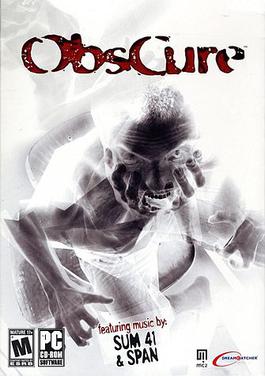
A Gold Mine of Ideas Drowned in Carbon Monoxide
I guess I should preface as this is my first piece here.
Hello everyone, I’m Crow; the resident webmaster and a writer for Green Thumbs. I’m a big fan of horror. I’m also a fan of survival horror. Believe it or not, I’m also a fan of the Sony PlayStation 2.
I’m sure you can see how these things all play in to each other.
Revisited is an unoriginal series title for write ups that I wanted to do for older games. Perhaps not all of these games are games I’ve played before, but they’re probably not something that’s within the zeitgeist that I want to cover.
Often times I find myself digging around for old games at my local shops or on lists of the Top 40 Survival Horror Games of All Time that, for some reason, love to include Supermassive Games’ Until Dawn (a fun game, but not what I would consider survival horror in a traditional sense). These lists always include the classics: Resident Evil, Silent Hill, Dead Space, the works. Been there. Done that. They’re good, and they’re classics for a reason, but it’s not what I want.
I’m digging for the kinda things your cousin found at a flea market. I want those PS2 games that you question if it even came out on the console, either due to being generally unremarkable, or just because nobody talked about it. None of those playground classics, just pure ObsCure.
How lucky was I to find a 2004 release by the exact name for the PS2 with a completely functional (albeit a little clunky) port on Steam. I absolutely gassed through this game in about two sessions, and honestly, I have a lot to say and a lot of credit to give.
Just How ObsCure Are We?
ObsCure was released September 30, 2004 in Australia, October 1, 2004, in Europe, and on April 6, 2005 in North America. Not the most typical release schedule, but hey, good for them on making it to the States. Developed by Hydravision Entertainment, this game ended up being published by 3 different studios (including Ubisoft in China) and, realistically, to not much fanfare. This was Hydravision’s first game on the scene, and for a studio that only lasted 14 years (having opened in 1999 and closed down in 2012) I have to say I was quite impressed in a lot of ways for their flagship solo title.
ObsCure and ObsCure II were, at the very least, impressive enough for Atari and or Eden Games to get Hydravision on board for the PS2 and Wii ports of Alone in the Dark (2008), a game that was notorious for being mid and having Atari threaten publications over poor review scores. Since, they had been relegated to the shovelware realm, pumping out classic hits like The X Factor for the PlayStation 3 and Aladdin Magic Racer for the Nintendo Wii, before going off the grid for good in 2012.
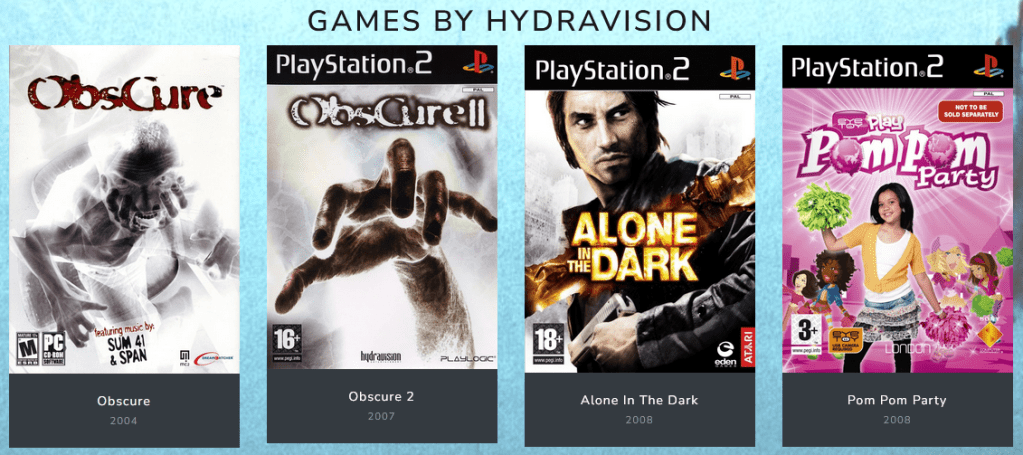
I’ve personally spoken to one person who has a vague memory of playing this game at their cousin’s house, which to me is indicative of just how ObsCure this game is. It’s one of those cousin games. Your cousin somehow had this game, his best friend at school’s cousin had this game, whatever. You get the idea.
So, what’s the deal?
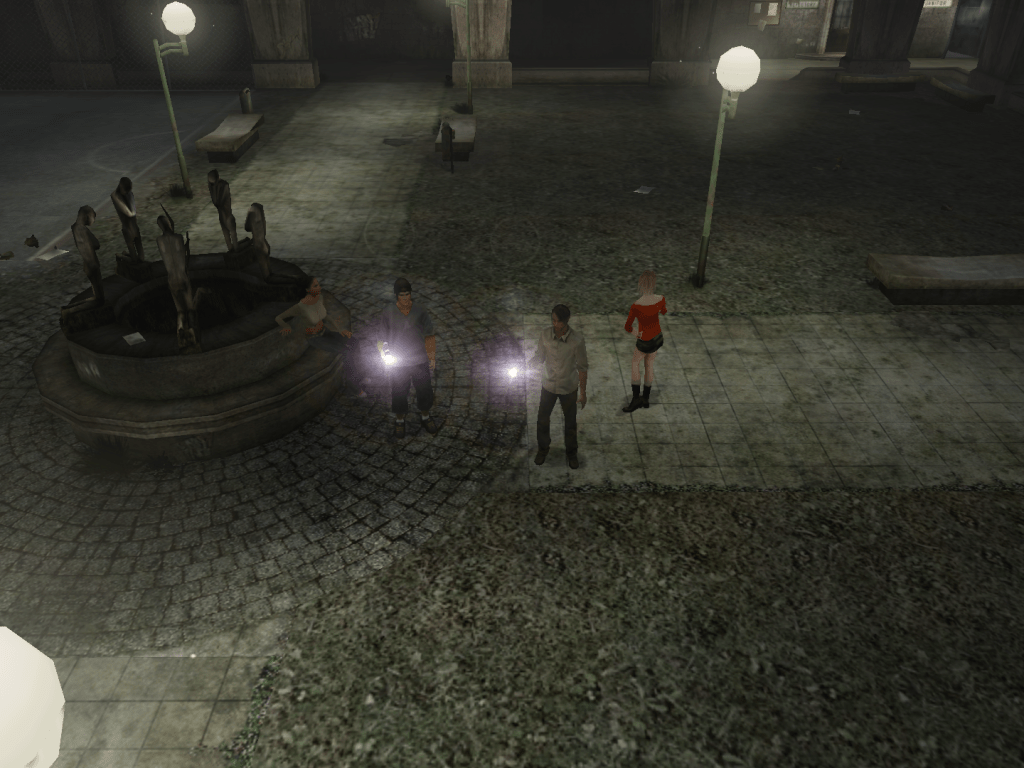
It’s a resident evil clone that somehow manages to pre-date the flashlight mechanics of Alan Wake, have an incredibly intuitive co-op functionality, and have a crazy 2004 pop punk aesthetic the entire time. One of the gang disappears after school one day and you and the mystery crew of his boys, his sister, and his girlfriend go looking for him only to find the school infested with monsters. Campus galore as you Resident Evil mansion your way around the various locations such as the auditorium, the nurse’s office, the cafeteria, etc.
Weapons are standard: pistols, shotguns, grenades, the works. What makes it unique, however, is flashlight mechanics.
This game does the Alan Wake “Focus the flashlight on an enemy to weaken them” in 2004, well before Wake hit the scene. One thing I found intuitive was the idea of consuming flashlights to attach to firearms, so the stronger the flashlight you’d like to pair with the stronger firearm. There’s no going back once you snap a flashlight on, but where there’s risk, there’s reward – can’t use a flashlight and a weapon without attaching them.
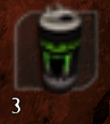
Healing is done with medkits and unbranded Monster Energy – which rocks. Any game that lets you slam 6 cans of Monster back to back is a huge win in my book.
Saving is done via discs that are found throughout the school and allow you to save anywhere, anytime. This is mostly done in Safe Zones, which act as hub areas to swap between characters and trade items.
This is important for two reasons:
- Death is permanent. You can’t revive anyone, and if anyone dies, you get the bad ending.
- Each character has a unique passive. One character picks locks faster, another has a sprint, another has an “item highlight”, one has the “what do I do now” button, and the final has a unique double-tap with firearms. She moves the slowest, but it’s broken.
Co-op functions in a couch mode, with each player taking control of a character. Even in solo you can have two characters going at once and can hot swap between them with the press of a button, but in co-op, I can imagine the fun of having your friend tagging along with you as you scream for them to help you break being grabbed. It predates RE5, which again, is another big visionary swing for this game.
The Game
SPOILERS AHEAD: It's bland.
Very typical “mad scientist abducts a character and everyone has to stop the big bad man who turns into a big evil demon at the end of the game”
There’s the meddling character who screws you over a few times, there’s the “this character has gone crazy because of the things going on”, a lot of tropes. The story is truly nothing to write about for how bland it is, which matches the gameplay.
It’s stiff, not particularly fun, and not particularly compelling, but it had a ton of really cool ideas. Flashlight mechanics are probably as fresh as ever since my research hasn’t led me to any games that pre-date the mechanic (I may write about this research later). Couch co-op resident evil well before RE5 was a great idea that could have gone really far if the rest of the game wasn’t so “meh”.
It was a game that captured me in ideas and vibes alone. I’m a sucker for the early 00s pop-punk “okay dweeb” aesthetic that this game pulls no punches in. On the PS2, the main theme is done by Sum 41. It’s unapologetic in being a game made for the time it came out, and I can’t help but admire and adore that endlessly.
The Verdict
I think the most important part of this series, Revisited, is going to be whether or not I think it’s worth going back to play a game. Whether you’ve played it or not, I think it’s going to be an important distinction between the two, so I’ll do my best to estimate for the replays in my first playthrough reviews like this one.
Based on our review scale, I’d give this game a solid 2 stars.

It’s charming, unique, and has a lot to offer to someone interested in the history of survival horror or early 00s PS2 pop punk vibes. The gameplay and story are lacking, but you can spend enough time wrapped up in the charm and unique mechanics that you’re ready for it to end by the time it’s coming to an end.
Feel free to drop some suggestions for Revisited, I’ll be keeping this series alive with some classics that we may end up streaming to twitch some day. Jury’s out on that one, but you never know what will happen next time on Revisited.



Leave a Reply